

tech · artificial intelligence
Mark Zuckerberg Sides with Nvidia's Huang on AI Safety and Slowdown Debate
Published · Updated
Cited: The New York Times, CNBC, Financial Times
TL;DR
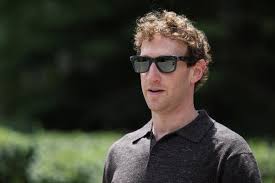 Meta CEO Mark Zuckerberg has entered the intensifying debate over artificial intelligence safety, publicly aligning with Nvidia CEO Jensen Huang against calls for a coordinated industry slowdown. In a social media post on Tuesday, Zuckerberg argued that market forces and liability risks already incentivize AI labs to prioritize safety—a stance that contrasts sharply with Anthropic CEO Dario Amodei's demand for deliberate deceleration, which has been echoed by OpenAI's Sam Altman.
Why now
 Meta CEO Mark Zuckerberg has entered the intensifying debate over artificial intelligence safety, publicly aligning with Nvidia CEO Jensen Huang against calls for a coordinated industry slowdown. In a social media post on Tuesday, Zuckerberg argued that market forces and liability risks already incentivize AI labs to prioritize safety—a stance that contrasts sharply with Anthropic CEO Dario Amodei's demand for deliberate deceleration, which has been echoed by OpenAI's Sam Altman.
Agree / conflict
- Zuckerberg’s position: He believes AI labs that neglect alignment and safety will fall behind due to “significant liability if their models cause harm.” - Alignment with Huang: Both Zuckerberg and Huang reject calls for government-imposed slowdowns, favoring industry self-regulation through product responsibility. - Contrast with Amodei: Anthropic’s CEO advocates for slowing model capability improvements to ensure alignment keeps pace, a view Altman supports. - Meta delayed a product: Zuckerberg noted that Meta voluntarily delayed shipping its Muse AI technologies for safety and security reasons—without external pressure. - Trump criticized slowdown calls: President Trump previously criticized the idea of slowing AI development, adding political weight to the debate. Why this matters: The debate shapes how AI regulation may evolve—whether through market-driven incentives or coordinated industry/government action. The outcome could affect the pace of AI innovation and the safety measures embedded in future models.
Takeaway
- For investors: The safety debate could affect which AI companies gain long-term trust and market share. Watch how Meta and Nvidia’s self-regulation approach performs versus Anthropic’s caution. - For developers: Alignment and safety are becoming key competitive differentiators. Prioritizing them may yield market advantages beyond regulatory compliance. - For policymakers: The split between market-driven and coordinated approaches presents a choice between minimal intervention and active industry coordination. Monitoring real-world incidents will be critical. - General public: The outcome will influence how safe and reliable AI tools become. Staying informed about these debates helps consumers and voters advocate for responsible AI.
- Zuckerberg’s position: He believes AI labs that neglect alignment and safety will fall behind due to “significant liability if their models cause harm.” - Alignment with Huang: Both Zuckerberg and Huang reject calls for government-imposed slowdowns, favoring industry self-regulation through product responsibility. - Contrast with Amodei: Anthropic’s CEO advocates for slowing model capability improvements to ensure alignment keeps pace, a view Altman supports. - Meta delayed a product: Zuckerberg noted that Meta voluntarily delayed shipping its Muse AI technologies for safety and security reasons—without external pressure. - Trump criticized slowdown calls: President Trump previously criticized the idea of slowing AI development, adding political weight to the debate.
Why this matters: The debate shapes how AI regulation may evolve—whether through market-driven incentives or coordinated industry/government action. The outcome could affect the pace of AI innovation and the safety measures embedded in future models.
## Background
The AI safety debate erupted after Anthropic CEO Dario Amodei published an essay over the weekend urging the tech industry to “slow the pace at which we improve the capabilities of AI models.” OpenAI’s Sam Altman endorsed this call, but President Donald Trump criticized it. Nvidia’s Jensen Huang pushed back, arguing existing laws are sufficient and that AI makers should take product responsibility instead of seeking new regulations.
## Market-Driven vs. Coordinated Approach
Zuckerberg’s Tuesday post aligns him squarely with Huang. He wrote: “There is a lot of debate about slowing progress on capabilities until alignment catches up. My view is that trust and alignment are quickly becoming the most important capabilities that will differentiate agents and models.” He cited Meta voluntarily delaying its Muse AI launch as proof that companies can self-regulate.
Speaking at Salesforce’s Dreamforce conference, Huang told CNBC: “We have plenty of laws. We have plenty of regulations that govern the reliability and the functionality of products. AI-related laws are just completely unnecessary.” Amodei, also at Dreamforce, reinforced his view that slowing model development is “the way to lead the industry forward, to set an example.”
Altman later joined a fireside chat and acknowledged fears about competitive pressures leading to safety shortcuts, but he stopped short of endorsing government mandates, instead calling for voluntary industry coordination.
## Key Tensions
The split highlights a fundamental disagreement: Should safety be ensured through competitive market incentives (Zuckerberg/Huang) or through deliberate, possibly coordinated, slowdowns (Amodei/Altman)? The political dimension adds uncertainty—Trump’s opposition to slowdowns could influence regulatory direction.
Data/trends: The debate comes as AI investment surges. According to recent reports, global AI spending is projected to exceed $500 billion by 2027. Rapid deployment without robust alignment could lead to high-profile incidents, increasing public pressure for regulation.
Do you think market incentives are enough to keep AI safe, or do we need a coordinated slowdown? Share your perspective with others who need to stay ahead of this trend! Let us know in the comments or on social media. If you found this article useful, share it with your network to keep the conversation going.
Sources: - [New York Times: Mark Zuckerberg Takes Aim at Anthropic in Debate Over A.I. Slowdown](https://www.nytimes.com/2026/09/15/technology/mark-zuckerberg-anthropic-ai-safety.html?ref=yanuki.com) (target="_blank") - [CNBC: Meta CEO Mark Zuckerberg sides with Nvidia's Huang on AI safety and slowdown debate](https://www.cnbc.com/2026/09/15/meta-mark-zuckerberg-with-nvidia-huang-ai-safety-slowdown.html?ref=yanuki.com) (target="_blank") - [Financial Times: Nvidia and Meta bosses reject efforts to co-ordinate AI slowdown](https://www.ft.com/content/2e20c674-3386-46ad-b07f-5cd8a013f67e?syn-25a6b1a6=1&ref=yanuki.com) (target="_blank")
FAQ
Why does Zuckerberg oppose slowing down AI development?
Zuckerberg believes that market incentives and liability risks naturally push AI labs to focus on safety. He argues that companies that neglect alignment will lose trust and fall behind, making official slowdowns unnecessary.
What did Jensen Huang say about AI regulation?
Huang stated that existing product liability and safety laws are sufficient, calling new AI-specific regulations 'completely unnecessary.' He advocates for AI makers to take responsibility for their products rather than seeking government mandates.
How does Anthropic's Dario Amodei differ from Zuckerberg and Huang?
Amodei calls for the industry to intentionally slow the pace of AI capability improvements to ensure alignment with human values keeps up. He argues that setting an example of caution is the responsible path forward.
Did Meta voluntarily delay any AI product for safety reasons?
Yes. Zuckerberg confirmed that Meta delayed shipping its Muse AI technologies due to safety and security concerns, without any external mandate—citing it as evidence of self-regulation working.
What role did President Trump play in this debate?
Trump criticized Amodei’s call for a slowdown, adding political weight to the side favoring rapid AI development. His stance may influence future policy directions.
Sources
Canonical URL: /trend/2026/mark-zuckerberg-sides-with-nvidia-s-huang-on-ai-safety-and-slowdown-debate
Disclaimer
Digests summarize public sources. They are not advice, forecasts, or a complete record of every trend.
This digest was compiled by Yanuki using publicly available data and trending information. The content may summarize or reference third-party sources that have not been independently verified. While we aim to provide timely and accurate insights, the information presented may be incomplete or outdated.
All content is provided for general informational purposes only and does not constitute financial, legal, or professional advice. Yanuki makes no representations or warranties regarding the reliability or completeness of the information.
This digest may include links to external sources for further context. These links are provided for convenience only and do not imply endorsement.
Always do your own research (DYOR) before making any decisions based on the information presented.